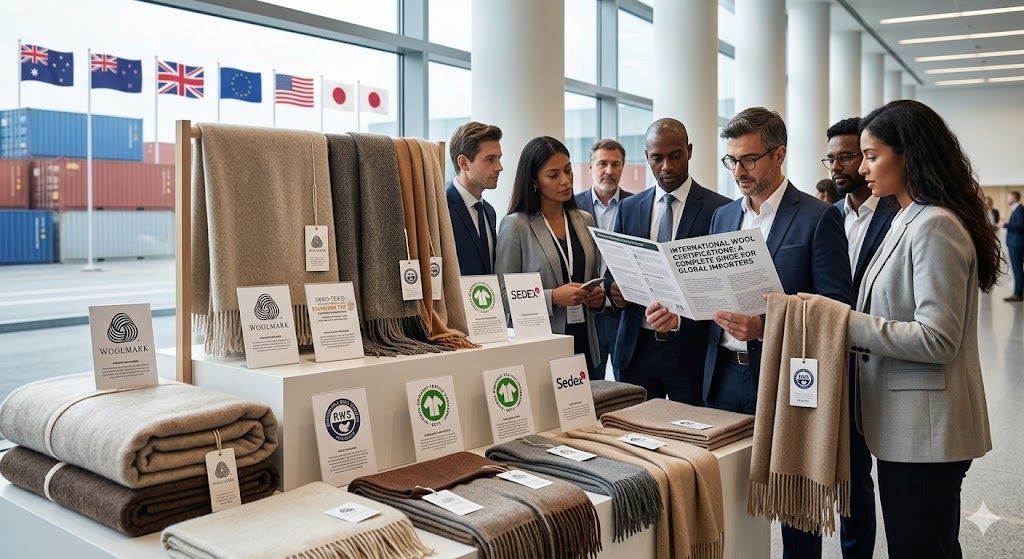
As consumer awareness of sustainability, product safety, animal welfare, and ethical sourcing continues to grow, securing the right wool textile certification has become increasingly important in the global textile industry. For importers, wholesalers, retailers, and private-label brands sourcing certified wool blankets, wool scarves, and wool shawls, understanding these credentials is essential for market access, customs compliance, and brand credibility.
This comprehensive guide to international wool certifications explains the most recognized standards in the industry—including Woolmark, OEKO-TEX®, RWS, GOTS, SEDEX, and BSCI—and outlines their importance across different international markets.
1. Woolmark Certification
The Woolmark certification is one of the most respected quality marks in the global wool industry. Issued by the Woolmark Company, it verifies that products meet strict requirements regarding pure wool fiber content, performance, durability, and manufacturing quality.
- Key Benefits: Guarantees genuine wool content, ensures product quality, and enhances premium brand positioning.
- Main Markets: Australia, New Zealand, United Kingdom, European Union, United States, Japan.
- Importance for Importers: Although not mandatory for customs clearance, Woolmark significantly improves market acceptance, making it a powerful tool when working with a sustainable wool scarves supplier in premium retail channels.
2. OEKO-TEX® STANDARD 100
The OEKO TEX standard 100 wool certification is one of the world’s most recognized textile safety standards. It tests finished products for harmful substances, chemicals, heavy metals, formaldehyde, and pesticides.
- Key Benefits: Demonstrates product safety for human use, meets strict chemical restrictions, and is suitable for close-to-skin products like wool shawls.
- Main Markets: European Union, United Kingdom, North America.
- Importance for Importers: Many global retailers require this certification before listing products. Without it, you face risks of retailer rejection, product recalls, and severe brand reputation damage.
3. Responsible Wool Standard (RWS)
The Responsible Wool Standard RWS focuses heavily on animal welfare, progressive land management, and full supply chain traceability from farm to final product.
- Key Benefits: Verifies responsible animal treatment, provides a verified chain of custody, and supports your brand’s sustainability claims.
- Main Markets: European Union, United Kingdom, United States, Canada, Australia.
- Importance for Importers: Major international brands increasingly demand RWS-certified materials. If you are importing certified wool shawls or throws, partnering with an RWS-certified manufacturer is crucial to remaining competitive in sustainable product categories.
4. Global Organic Textile Standard (GOTS)
GOTS is considered the gold standard for organic wool textile certification worldwide. It covers both strict environmental and social criteria throughout the entire processing pipeline.
- Key Benefits: Requires certified organic wool fibers, restricts hazardous processing chemicals, and ensures socially responsible manufacturing.
- Main Markets: Germany, France, Netherlands, Scandinavia, United States.
- Importance for Importers: Essential for brands marketing organic textiles. Without GOTS, you cannot legally market products as “organic” in many premium jurisdictions, increasing the risk of greenwashing allegations.
5. SEDEX (Supplier Ethical Data Exchange)
SEDEX is a globally recognized ethical sourcing platform rather than a product-specific label. Its SMETA audit assesses labor standards, health and safety, environmental performance, and business ethics.
- Importance for Importers: Large multinational retailers often require suppliers to complete SEDEX audits before approving factories. Failure to comply can result in exclusion from major retail procurement programs.
6. BSCI (Business Social Compliance Initiative)
BSCI is a widely accepted social compliance program in Europe focusing on improving working conditions. It audits fair wages, working hours, employee safety, and child labor prevention.
- Importance for Importers: Essential for entering European distribution channels. Many European buyers mandate BSCI-audited factories as part of their baseline sourcing standards.
Which Certifications Are Required for Customs Clearance?
In most regions, customs authorities do not directly mandate Woolmark, RWS, SEDEX, or BSCI certifications for import clearance. However, importers must always comply with local legal regulations regarding product safety, chemical restrictions, and fiber labeling.
European Union
Particularly important are OEKO TEX standard 100 wool testing compliance, REACH documentation, and accurate fiber composition labeling. Non-compliance can lead to customs detention, mandatory market withdrawal, and heavy financial penalties.
United States
Key legal requirements include accurate fiber content labeling, country of origin labeling, and compliance with the CPSIA (for children’s products). While not legally mandatory at customs, major US retailers strongly prioritize RWS and OEKO-TEX certified products.
Final Recommendations for Sourcing Certified Wool Blankets and Accessories
For wool blankets, wool scarves, and wool shawls entering international markets, proper compliance is no longer simply an optional marketing tool—it is a vital business requirement. A robust wool textile certification portfolio typically includes:
- Woolmark → Product quality assurance
- OEKO-TEX® → Product safety
- RWS → Responsible wool sourcing
- GOTS → Organic and sustainable production
- SEDEX → Ethical supply chain management
- BSCI → Social compliance and factory responsibility
By aligning your supply chain with these international benchmarks, you will significantly improve buyer confidence, streamline retailer approvals, minimize regulatory risks, and build long-term brand equity in the global marketplace.
发表回复