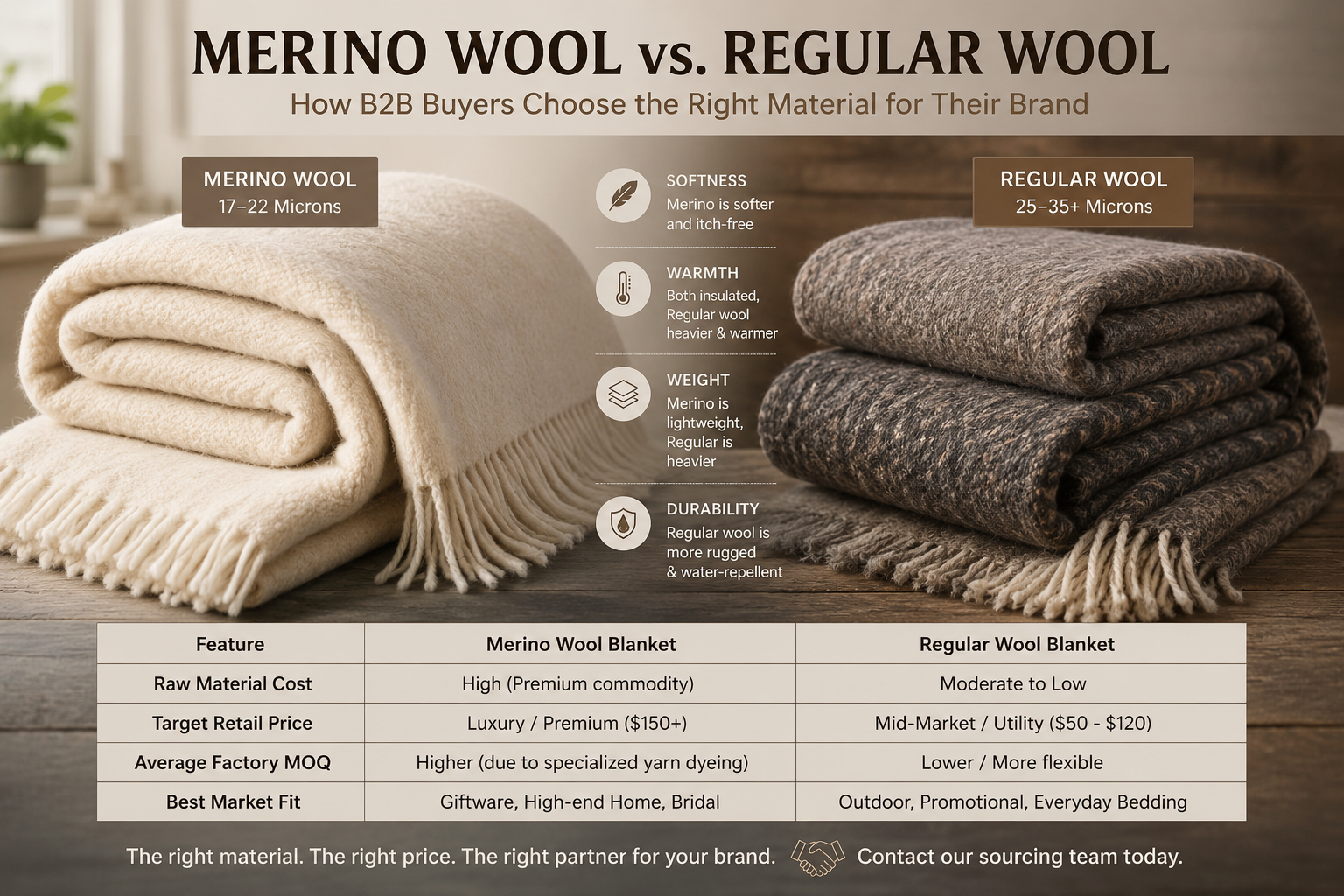
When sourcing wholesale merino wool blankets or traditional wool products for your brand, hospitality business, or e-commerce store, the first and most critical decision is choosing the right raw material. The global textile market offers various options, but the procurement debate usually comes down to premium merino wool versus regular wool.
While both materials offer the exceptional natural benefits of wool, they cater to completely different market segments, price points, and customer expectations. As an experienced wool blanket manufacturer, we have created this guide to break down the structural, functional, and financial differences to help B2B buyers make the smartest sourcing decision for their bulk wool blankets.
1. Fiber Diameter and Touch: Premium Softness vs. Rugged Durability
The fundamental difference between merino and regular wool lies under the microscope: fiber diameter, which is measured in microns.
- Merino Wool (17–22 microns): Merino sheep produce exceptionally fine, long fibers. Because these fibers are so thin, they bend easily when pressed against the skin. This makes wholesale merino wool blankets incredibly soft, luxury-grade, and completely itch-free.
- Regular Wool (25–35+ microns): Standard wool comes from broader sheep breeds. The thicker fibers are stiffer, which gives the traditional wool blanket its characteristic “coarse” or “rustic” feel that consumers associate with heritage products.
💡 Buyer’s Tip: If your target audience consists of luxury home decor boutiques, high-end e-commerce brands, or premium wellness resorts, merino wool is non-negotiable. If you are sourcing for outdoor gear brands, military contracts, or rustic cabin rentals, standard bulk wool blankets provide the heavy-duty ruggedness required.
2. Performance: Warmth, Breathability, and Weight
Both materials are naturally temperature-regulating and moisture-wicking, but their weight-to-warmth ratios differ significantly due to their structural profiles.
- Merino Wool: It is lightweight yet highly insulating. Merino blankets trap body heat efficiently without adding heavy bulk, making them perfect for premium all-season throw blankets and luxury travel accessories.
- Regular Wool: Standard wool blankets are typically heavier and denser. They offer excellent insulation in extreme cold and possess natural water-repellent properties, making them the gold standard for rugged outdoor, camping, and military survival blankets.
3. Financial Breakdown: Cost, MOQ, and ROI
As a dedicated wool blanket manufacturer, we understand that product design and material selection must strictly align with your business’s profit margins.
| Feature | Merino Wool Blanket | Regular Wool Blanket |
|---|---|---|
| Raw Material Cost | High (Premium global commodity) | Moderate to Low |
| Target Retail Price | Luxury / Premium ($150+) | Mid-Market / Utility ($50 – $120) |
| Average Factory MOQ | Higher (due to specialized yarn preparation) | Lower / More flexible production |
| Best Market Fit | Giftware, High-end Home Decor, Bridal | Outdoor, Promotional, Everyday Bedding |
Choosing between merino and regular wool isn’t about finding which material is universally “better”—it is about finding the exact right fit for your brand’s positioning and pricing strategy.
Partner with a Trusted Factory to Build Your Collection
Whether you decide to launch a luxury line of wholesale merino wool blankets or high-utility bulk wool blankets, partnering with the right factory ensures consistency, quality control, and reliable delivery.
Ready to develop your next blanket collection?
📩 Request Yarn Samples & Swatches:Contact our sourcing team today to request physical fabric swatches and receive a customized manufacturing quote tailored to your target margins.
发表回复